Feline Sarcopenia: Muscle Loss in Senior Cats, Bony Spine, and Protein Support
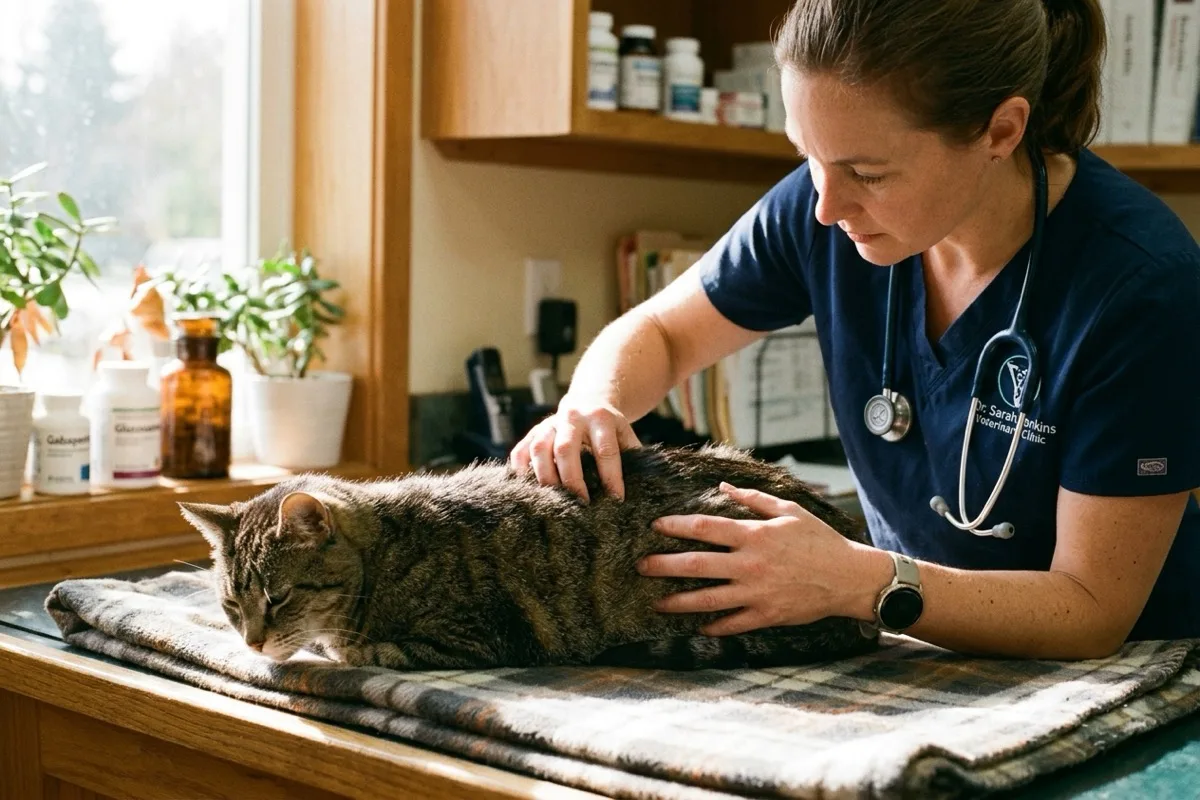
Stroking an older cat and suddenly feeling a razor-sharp spine, protruding hip bones, and sunken thigh muscles is distressing. In felines over ten years of age, progressive loss of lean skeletal muscle mass is termed feline sarcopenia.
This guide is not a substitute for a vet.
In this guide
1. Muscle Condition Score (WSAVA)
The WSAVA assesses muscle bulk across epaxial muscles, scapulae, and pelvic wings:
- Normal: Spine and ribs are smoothly palpable under a pliable muscular layer.
- Mild loss: Spinal dorsal processes feel defined and angular.
- Moderate loss: Prominent wing-like iliac crests and hollowing along the thighs.
- Severe loss: Sunken skull temples, sharp backbone, and hindlimb weakness.
---
2. Rule Out Secondary Disease
Rapid muscle wasting demands screening for:
- Hyperthyroidism: Fuels rapid muscle burning despite voracious eating.
- Arthritis and joint degeneration: Disuse atrophy from chronic mobility pain.
- Hypokalemia (low potassium): Prompts extreme weakness and characteristic cervical ventroflexion (drooping head).
---
3. Nutritional Rescue
- Transition to high-moisture canned diets.
- Supplement anti-inflammatory Omega-3 EPA/DHA via veterinary salmon oil.
If muscle weakness prevents standing, consult our directory of emergency veterinary clinics.
---
Scientific Sources and Evidence
- WSAVA: Muscle Condition Score Guidelines.
- JFMS: Sarcopenia and Cachexia in the Aging Feline Patient.
Nekolife Community
Caring for a cat? Keep their health in your pocket
Register your cat on Nekolife to track vaccination history, weight, and get advice from loving cat parents.
- Vaccine & weight records
- Supportive cat community
- Earn Meow Points & badges
Create free cat passport →100% free forever
Related pages
Know someone who needs this?