Homemade Broths and Feline Hydration: Safe Recipes, Kidney Benefits, and Toxic Pitfalls
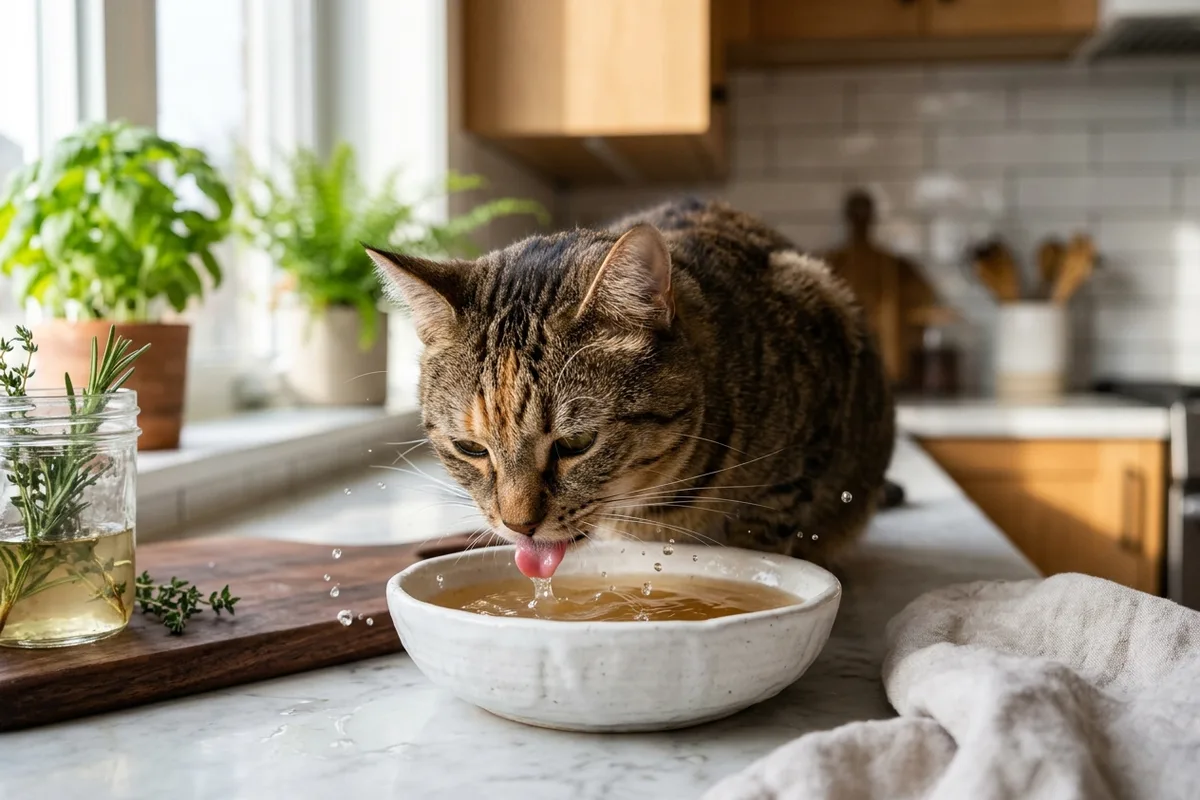
Domestic felines descend from the African wildcat (Felis lybica), an arid-zone obligate carnivore engineered to conserve water and absorb fluids primarily through prey moisture. In modern homes, dry kibble diets frequently produce chronic subclinical dehydration, dramatically increasing vulnerability to cat urinary tract infections and FLUTD and accelerating chronic kidney disease in cats. Nutritious homemade broths made to strict veterinary standards provide an irresistible, biologically appropriate method to boost daily water intake, complementing techniques explained in our guide on how to get a cat to drink water.
In this guide
1. Feline Thirst Physiology and Kidney Risks
Cats possess a diminished sensitivity to systemic dehydration compared to humans or dogs. Cats eating exclusively dry kibble (10% water) consume approximately 50% less total moisture per day than cats eating raw or canned food (75–80% moisture).
This chronic state produces ultra-concentrated urine (specific gravity often exceeding 1.050), putting immense osmotic stress on nephrons and encouraging calcium oxalate and struvite crystal formation. Offering savory broths naturally restores healthy urine dilution.
---
2. Veterinary Recipe: Basic Chicken Bone Broth
Permitted ingredients
- 1 fresh chicken carcass or 500 g raw chicken necks/wings.
- 1.5 liters filtered water.
- 1 teaspoon raw apple cider vinegar (the mild acid helps leach collagen and minerals from cartilage).
- Optional: 1/4 peeled carrot (for subtle natural scent; discard after simmering).
Absolute bans
- Zero salt, no bouillon cubes, no pepper, no bay leaves, no onions, garlic, shallots, or wine.
Step-by-step preparation
- Place the chicken pieces and water into a stainless steel pot or slow cooker.
- Add apple cider vinegar.
- Bring to a gentle boil, skim any surface scum, and reduce heat to the lowest setting.
- Simmer covered for 2 to 3 hours (or 8 to 12 hours in a slow cooker).
- Strict straining: Discard EVERY piece of cooked bone. Cooked bones become brittle and can pierce the esophagus, stomach, or bowel.
- Chill thoroughly in the refrigerator: solidified fat will form a hard white disc at the top. Scoop off and discard all fat to prevent feline pancreatitis.
The finished broth forms a nutrient-dense jelly rich in glucosaminoglycans, proline, and glycine.
---
3. Serving Guidelines and Freezing
- Serve warm: Cats rely heavily on olfactory cues. Warm a small portion to 35–37°C before serving.
- Meal topper: Add 2–3 tablespoons over commercial wet food or drizzle over kibble.
- Freezing: Store in silicone ice trays. Each cube yields about 20–25 ml of pristine hydration. Keeps 3 months frozen and 3 days refrigerated.
---
Sources and Scientific Citations
- Zoran, D. L. (2002). The carnivore connection to nutrition in cats. JAVMA, 221(11), 1559-1567.
- Buffington, C. A. T., et al. (2006). Clinical evaluation of multimodal environmental modification in cats with idiopathic cystitis. JFMS, 8(4), 261-268.
- Cope, R. B. (2005). Allium species poisoning in dogs and cats. Veterinary Medicine, 100(8), 562-566.
- FEDIAF (2024). Nutritional Guidelines for Complete and Complementary Pet Food for Cats and Dogs.
Caring for a cat? Keep their health in your pocket
Register your cat on Nekolife to track vaccination history, weight, and get advice from loving cat parents.
- Vaccine & weight records
- Supportive cat community
- Earn Meow Points & badges
Related pages
Know someone who needs this?