Cat Urinary Tract Infections & FLUTD: Symptoms, Care, and Emergency Signs
Feline Lower Urinary Tract Disease (FLUTD) is not a single disease, but an umbrella clinical term encompassing various medical conditions affecting the bladder and urethra of cats. Among these conditions, Feline Idiopathic Cystitis (FIC) accounts for nearly 60% of cases in cats under 10 years of age, alongside urinary crystals or stones (urolithiasis) and, far less frequently in young felines, true bacterial infections.
In this guide
When Is It an Immediate Veterinary Emergency?
A male cat's urethra is narrow and tapered. A plug of inflammatory protein, mucus, blood, and struvite crystals can lodge in the penis and seal it shut within hours.
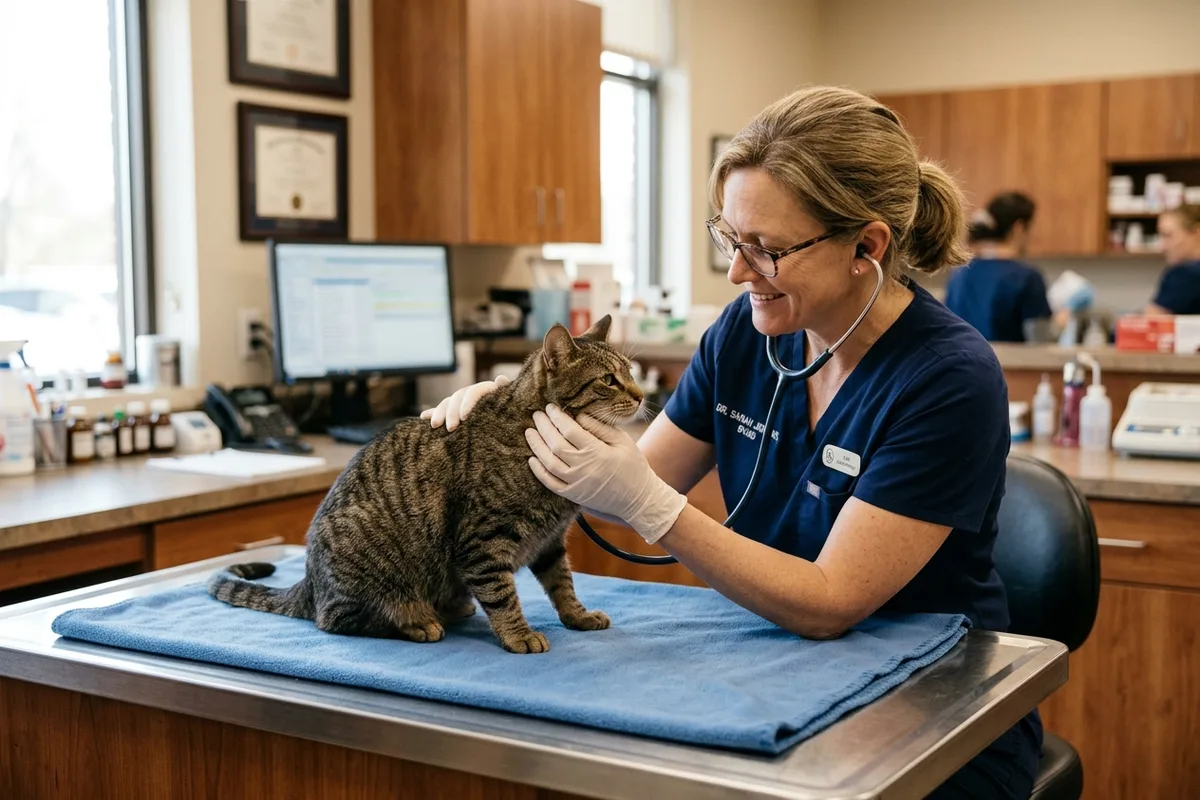
Seek emergency veterinary care immediately or find an open clinic at Vets near you if you observe:
- Unproductive straining in the litter box (stranguria): The cat squats repeatedly, cries out, and leaves no urine pool behind, only a drop or nothing at all.
- Obsessive genital licking: Licking the penis or perineum frantically, showing defensive aggression if you touch the hindquarters.
- Hard, swollen abdomen: The bladder is as firm and distended as a tennis ball and cannot empty.
- Vomiting, profound lethargy, or hypothermia: Signs that nitrogenous waste and potassium have flooded the bloodstream (uremic poisoning and imminent cardiac arrest).
- Peeing outside the box with visible blood (hematuria): Cats often urinate on cool porcelain surfaces like sinks, bathtubs, or floor tiles seeking thermal relief from bladder burn. Compare this with our guide on why cats pee outside the litter box.
---
Main Causes of FLUTD: Why Does It Happen?
FLUTD cases require accurate clinical diagnostics including ultrasound, urinalysis with sediment check, and digital radiography:
```mermaid
graph TD
A["Urinary Distress & Pain (FLUTD)"] --> B["Feline Idiopathic Cystitis - FIC (55-60%)"]
A --> C["Urinary Stones & Crystals (15-20%)"]
A --> D["Obstructive Urethral Plugs (10-15%)"]
A --> E["True Bacterial UTI (<3% young, >15% senior)"]
A --> F["Neoplasia or Trauma (<2%)"]
```
1. Feline Idiopathic Cystitis (FIC)
The most common cause in young and middle-aged cats. FIC is a psycho-neuro-endocrine disorder: when exposed to household stress and anxiety (renovations, moving, strange visitors, inter-cat conflict, or uncleaned litter boxes), the cat's brain releases stress hormones that alter the glycosaminoglycan (GAG) protective bladder layer, allowing harsh acidic urine to scald underlying sensitive sensory nerves.
2. Urolithiasis (Bladder Stones and Crystals)
Dissolved minerals precipitate when urine becomes supersaturated:
- Struvite (Magnesium Ammonium Phosphate): Typically form in alkaline urine (pH > 7.0) and can be dissolved with specialized clinical diets.
- Calcium Oxalate: Common in overly acidic urine (pH < 6.2); these stones cannot be dissolved medically and frequently require surgical cystotomy for removal.
3. Bacterial Infections (True UTIs)
A healthy cat's urine is naturally concentrated (specific gravity > 1.035), creating a hostile barrier against bacteria. Genuine bacterial UTIs occur almost exclusively in senior cats suffering from chronic kidney disease or feline diabetes, where dilute urine allows bacterial colonization.
---
Comparison Table: Bacterial UTI vs. Stress Cystitis vs. Blockage
| Metric | Bacterial UTI | Idiopathic Cystitis (FIC) | Urethral Blockage (Emergency) |
|---|---|---|---|
| Typical Age | Senior cats (> 10 years) | Young & adult cats (1 to 8 years) | Any age (males > 90%) |
| Bacterial Culture | Positive growth | Negative (sterile inflammation) | Variable |
| Urine Flow | Frequent small volumes | Frequent painful dribbles | Zero urine or tiny droplets with agony |
| Risk Level | Moderate, treat with culture | Chronic, recurring flare-ups | Lethal within 24-48 hours if untreated |
| Standard Care | Targeted antibiotics | Stress reduction, pain relief, water | Emergency unblocking, catheter, IV fluids |
---
Prevention and Long-Term Care Protocols
Long-term management requires addressing both urine chemistry and feline emotional well-being:
1. Hydration & Moisture-Rich Diet
Diluted urine (specific gravity 1.020 to 1.025) physically prevents crystal aggregation. If your cat eats only dry food, they exist in a chronic state of subclinical dehydration. See our guide on how to get a cat to drink water to set up recirculating fountains and unsalted bone broth toppers.
2. Multimodal Environmental Modification (MEMO)
Endorsed by the American Association of Feline Practitioners (AAFP):
- Litter Box Golden Rule: Number of boxes = Number of cats + 1. Placed in quiet, separate areas away from loud appliances.
- Vertical Territory: Cat trees, climbing perches, and safe window viewing to diffuse territorial disputes. Explore our guide to indoor cat environmental enrichment.
- Synthetic Pheromones (Feliway Optimum): Proven to lower the neuro-inflammatory trigger of idiopathic cystitis.
3. Analgesia and Antispasmodics (Prescription Only)
A spasming bladder causes intense visceral agony. Veterinarians prescribe targeted feline NSAIDs, buprenorphine, and urethral muscle relaxants (such as prazosin). Never administer human painkillers like acetaminophen (Tylenol), ibuprofen, or aspirin—they cause lethal liver necrosis and methemoglobinemia in cats.
---
Veterinary Sources and Clinical References
- ISFM (International Society of Feline Medicine): Consensus Guidelines on the Diagnosis and Management of Feline Lower Urinary Tract Disease, Journal of Feline Medicine and Surgery.
- AAFP (American Association of Feline Practitioners): Environmental Needs and Feline Idiopathic Cystitis Guidelines.
- Cornell Feline Health Center: Feline Lower Urinary Tract Disease: Risk Factors, Symptoms, and Therapy.
- UC Davis School of Veterinary Medicine: Emergency Approach to Feline Urethral Obstruction.
Frequently asked questions
Why are male cats at higher risk for deadly blockage?
Female cats have a wide, short, and elastic urethra, allowing them to pass small stones and grit easily despite discomfort. Male cats possess a long, narrow, non-distensible urethra that tapers near the tip of the penis, creating a bottleneck where crystals and mucus easily form an airtight obstruction.
Should I ask for antibiotics just in case?
No. Prescribing antibiotics for idiopathic cystitis without a positive culture is completely ineffective and fuels antibiotic resistance. It exposes the cat to unnecessary gastrointestinal upset without resolving the sterile neurogenic inflammation.
Does my cat need prescription urinary food forever?
If your cat has a documented history of struvite or calcium oxalate stones, prescription urinary diets help regulate mineral saturation and urine pH. However, increasing moisture intake remains the most powerful long-term therapy. ---
Caring for a cat? Keep their health in your pocket
Register your cat on Nekolife to track vaccination history, weight, and get advice from loving cat parents.
- Vaccine & weight records
- Supportive cat community
- Earn Meow Points & badges
Related pages
Know someone who needs this?