Feline Separation Anxiety: Signs of Anxious Attachment, Peeing on Beds, and Solutions
The enduring stereotype that domestic cats are emotionally aloof, hyper-independent solitary beings who remain indifferent to human absence has been soundly debunked by veterinary behavioral science. Landmark research from Oregon State University (OSU) demonstrated that cats form distinct socio-emotional attachment styles with their human guardians—mirroring the developmental attachment bonds observed in dogs and human infants.
In this guide
1. Primary Etiology of Separation Anxiety in Cats
Cats thrive on environmental stability and predictability. Disruptions in social routines frequently trigger anxiety:
- Early weaning and bottle rearing: Kittens separated from their mothers prior to 8 to 12 weeks of age miss critical feline emotional self-regulation lessons.
- Abrupt lifestyle shifts: Transitioning back to full-time office work following prolonged remote telecommuting or extended vacations.
- Hyper-attachment reinforcement: Inadvertently encouraging 24/7 physical contact where the cat is never allowed or encouraged to engage in independent play.
- Impoverished indoor environments: Barren living spaces devoid of vertical territory or sensory enrichment where the human is the solitary source of stimulation.
---
2. Differential Diagnosis: Anxiety, Boredom, or Medical Disease?
Before labeling behavioral abnormalities as separation-related, veterinary medical clearance is non-negotiable:
- Idiopathic cystitis vs. Anxious marking: Painful straining or microscopic blood requires urinalysis and ultrasound imaging to rule out urinary tract disease.
- Feline hyperthyroidism: In mature cats over 7 years old, pacing, restless agitation, and loud vocalizations often stem from elevated circulating thyroid hormone (T4).
- Simple under-stimulation (boredom): A bored cat scratches furniture for fun but exhibits normal relaxed resting postures and eats enthusiastically when left alone.
---
3. Step-by-Step Behavioral Modification Protocol
Reconditioning separation distress requires systematic repetition over weeks:
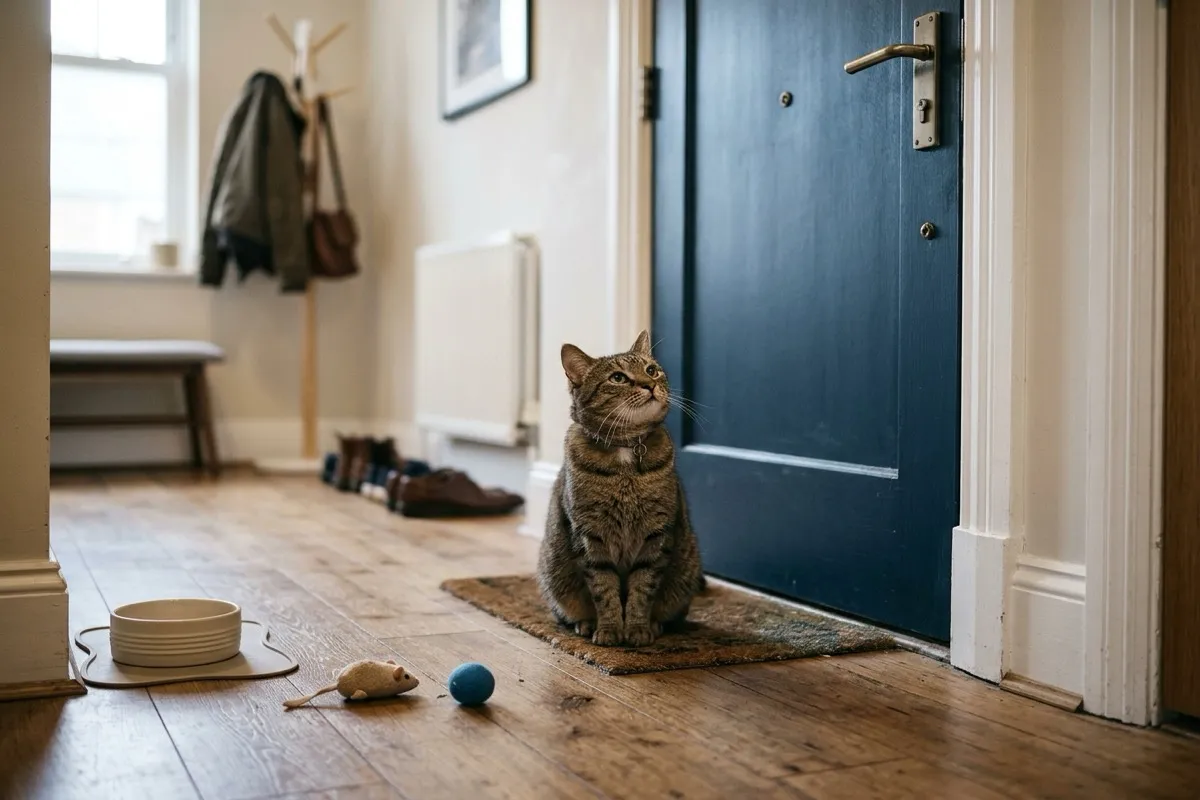
- Decouple pre-departure cues: Pick up your briefcase and sit down on the sofa to browse your phone; slip on your winter coat and head to the kitchen to brew coffee. Devalue these objects as indicators of abandonment.
- Micro-absences with calm returns: Step outside the front door for 30 seconds, then return calmly without speaking. Gradually advance to 2 minutes, 5 minutes, and 15 minutes, consistently rewarding calm composure.
- The calming power of licking: Licking triggers endogenous endorphin cascades. Prepare lick mats spread with high-value wet paté or enzymatic dental paste immediately before your departure.
- Acoustic and visual soothing: Research shows that low-volume classical piano arrangements or specialized feline television channels (Cat TV featuring bird feeders) reduce cortisol surges.
---
4. When to Consult a Veterinary Behaviorist
When anxiety manifests as self-injury or severely compromises feline welfare, medical intervention is indicated:
- The cat develops extensive alopecia or open skin lesions from obsessive grooming.
- Complete refusal of water and food during guardian absences, resulting in weight loss.
- Incessant yowling that prompts landlord or neighbor complaints.
A board-certified veterinary behaviorist can prescribe neurochemical mood stabilizers (such as fluoxetine or transdermal gabapentin) in conjunction with clinical environmental modification.
---
Scientific References and Sources
- Current Biology: Attachment bonds between domestic cats and humans (Oregon State University Animal Condition).
- Journal of Feline Medicine and Surgery: Feline separation anxiety: Clinical signs, risk factors, and behavioral management.
- Applied Animal Behaviour Science: Evaluation of separation-related problems in domestic cats: Demographics and clinical features.
Caring for a cat? Keep their health in your pocket
Register your cat on Nekolife to track vaccination history, weight, and get advice from loving cat parents.
- Vaccine & weight records
- Supportive cat community
- Earn Meow Points & badges
Related pages
Know someone who needs this?