Cats Fighting: Why It Happens and Complete Reintroduction Protocol
Few household situations are as distressing for cat parents as watching two bonded companions—or cats that previously coexisted in quiet tolerance—suddenly erupt into vicious fighting, terrifying shrieks, hissing, and flying fur. Unlike dogs or human beings, felines lack innate evolutionary social mechanisms for "post-conflict reconciliation." Once a catastrophic territorial or fear-based fight shatters social trust, hostility can become chronic without deliberate human intervention.
In this guide
Why Bonded Cats Turn on Each Other: Core Triggers
Feline inter-cat aggression never occurs in a vacuum. Understanding the underlying trigger is the first step toward resolution:
1. Redirected Aggression: The Hidden Culprit
Redirected aggression occurs when a cat is triggered into extreme fight-or-flight arousal by a high-stakes stimulus they cannot physically access:
- An unfamiliar roaming neighborhood cat marking outside a low window or sliding door.
- A terrifying sudden loud noise (dropped construction tool, thunder clap).
- The novel scent of an unfamiliar predatory animal on a visitor's shoes.
Unable to attack the distant threat, the cat discharges its autonomic defensive strike onto the nearest moving being, which is almost always the unsuspecting companion cat. If the victim fights back in terror, the peaceful scent bond is fractured instantly.
2. Concealed Pain and Medical Vulnerability
Cats instinctively mask physical vulnerability. A cat suffering from feline arthritis, dental resorptive lesions, or subclinical pancreatitis will act defensive and irritable. If the other cat initiates a boisterous greeting, the ailing cat may strike out preemptively to avoid being hurt. Review behavioral pain markers in our clinical guide on how to tell if a cat is in pain.
3. Non-Recognition Aggression (The Vet Clinic Scent)
When one cat returns from a veterinary clinic, its fur carries synthetic clinic odors (antiseptics, medications, anal gland secretions of fearful animals). The homebody cat does not recognize the communal group scent, treating the returning cat as an alien intruder.
4. Social Maturity and Territory Realignment
Cats reach social maturity between 18 and 36 months of age. Kittens that grew up happily together may renegotiate territorial boundaries as adults, creating conflict if vertical space or quiet hideaways are lacking.
---
Rough Play vs. Real Aggression: How to Tell the Difference
Use this feline ethological checklist to diagnose your cats' interactions:
| Behavioral Marker | Playful Roughhousing | True Feline Aggression |
|---|---|---|
| Vocalizations | Silent, chirps, or gentle trills | Low guttural growling, prolonged hissing, shrieking |
| Claws and Bites | Claws retracted, inhibited play bites | Extended sharp claws, targeted deep bites to neck/abdomen |
| Ear Posture | Upright, forward-facing, relaxed | Pinned tightly backward flat against skull |
| Coat and Tail | Smooth coat, relaxed or gently curved tail | Full piloerection (bristling bottlebrush tail and arched spine) |
| Role Reversals | Mutual reciprocity (chaser becomes chased) | Unilateral bullying (persistent attacker, cornered victim) |
| Pauses and Breathing | Natural breaks, mutual grooming breaks | Frozen posture, rigid hypervigilance, locked staring |
---
What to Do During a Cat Fight: Critical Safety Rules
When a fight breaks out, your immediate priority is breaking sensory engagement without getting bitten:
What You Must NEVER Do:
- Never grab fighting cats with bare hands: In extreme sympathetic panic, cats react purely on instinct and will inflict severe puncture wounds.
- Do not scream or physically strike the cats: Loud screams confirm to the cats that their environment is actively dangerous, escalating their panic.
- Avoid spraying water point-blank: While it might shock them apart briefly, it induces severe secondary stress that worsens underlying resentment.
Safe Intervention Steps:
- Visual Barrier Interruption: Slide a large piece of thick cardboard, a couch cushion, a wide laundry basket, or an opened heavy blanket directly between them to instantly sever eye contact.
- Indirect Distraction: Drop a thick folded bath towel onto the floor nearby or clap your hands firmly once to redirect attention for a fraction of a second.
- Dark Room De-escalation: Toss a thick towel over the primary aggressor, guide them gently into an empty bedroom, and close the door. Keep the room dark and quiet for at least 2 to 4 hours until physiological cortisol and adrenaline return to baseline.
---
The 5-Phase Cat Reintroduction Protocol
When social trust is broken, you cannot simply throw the cats back together. This proven clinical protocol resets their shared scent profile from scratch:
```
[Phase 1: Total Separation] ──> [Phase 2: Scent Swapping] ──> [Phase 3: Territory Rotation]
│
[Phase 5: Supervised Freedom] <── [Phase 4: Screened Visual Contact] <────┘
```
Phase 1: Absolute Physical Separation (Days 1–3)
House each cat in a separate, fully equipped room with zero visual contact. Provide each room with its own food, water, litter box, scratching post, and cozy sleeping spot. Install synthetic feline appeasing pheromone diffusers (Feliway Friends / Optimum) in both living areas to dampen baseline tension (learn how they work in our guide on cat stress and anxiety).
Phase 2: Scent Swapping and Positive Pairing (Days 4–7)
Cats communicate predominantly through communal olfaction:
- Gently stroke a clean cotton cloth or sock along Cat A's facial pheromone glands (cheeks, chin, base of ears).
- Place that scented cloth underneath or directly beside Cat B's food dish, and vice versa.
- Pair the scent of the other cat with high-value treats (freeze-dried meat or lickable puree). If either cat hisses at the cloth, move it further away and advance more gradually.
Phase 3: Silent Territory Rotation (Days 8–12)
Confine Cat A in a bathroom for thirty minutes and allow Cat B to freely explore Cat A's primary living quarters without meeting. Then swap them. This allows each cat to explore and familiarize itself with the other's scent markers in a calm, non-threatening environment.
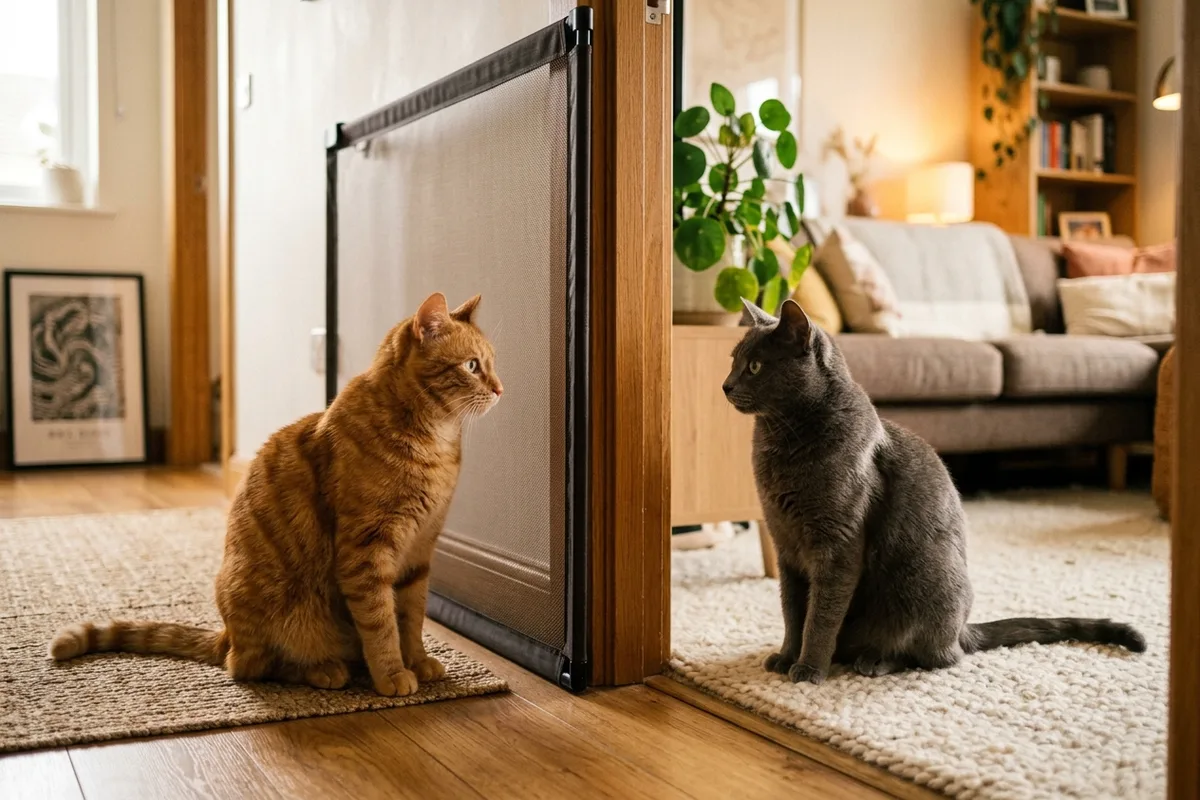
Phase 4: Screened Visual Contact (Days 13–20)
Install a sturdy mesh screen door, an adjustable baby gate, or prop the interior door open just 2 inches (5 cm) secured firmly with door stops:
- Position food bowls on opposite sides of the barrier, several feet apart.
- Feed both cats their favorite meals simultaneously while they can see each other's silhouettes.
- Eating releases positive neurochemicals, conditioning the brain that seeing the other cat brings great rewards.
- Conduct brief 5-to-10-minute sessions. If staring, growling, or tense posturing occurs, calmly drape a sheet over the gate and end the session without scolding.
Phase 5: Supervised Joint Freedom (Day 21 Onward)
Remove the barrier during a relaxed part of the day after both cats have enjoyed individual playtime with interactive wand toys:
- Keep initial sessions short (10 to 15 minutes) in a neutral common room.
- Have a large cushion or piece of cardboard within arm's reach.
- Heavily reward all calm body language (blinking slowly, looking away, yawning, self-grooming).
- Gradually expand daily cohabitation time until peaceful coexistence becomes standard.
---
The n+1 Rule and Environmental Optimization
Inadequate resource distribution is the most common fuel for feline territorial warfare:
- Litter Box Golden Rule (n+1): If you have 2 cats, you need 3 litter boxes; if you have 3 cats, you need 4 litter boxes. Distribute them across distinct rooms so a dominant cat cannot guard access to all facilities.
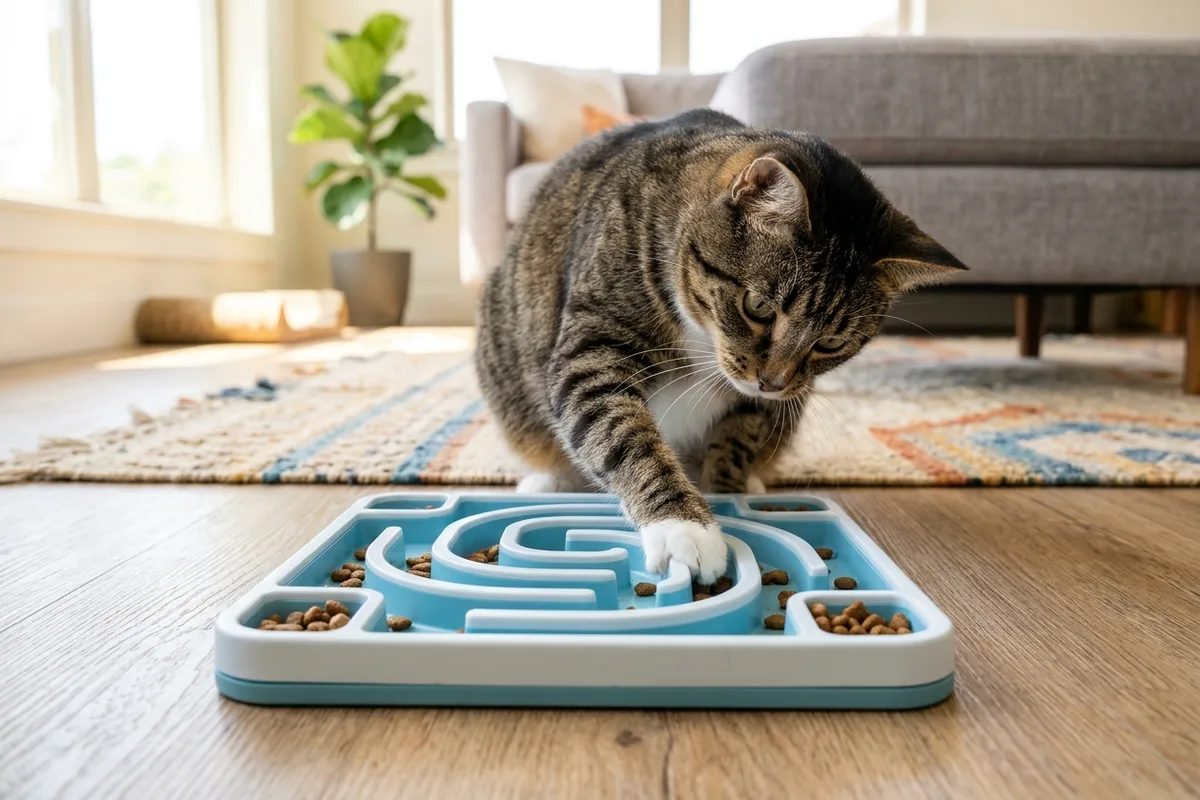
- Decentralized Feeding Stations: Cats are solitary hunters and solitary eaters. Forcing cats to eat side-by-side creates chronic feeding anxiety and territorial friction.
- Vertical Highroads: Install sturdy wall shelves, climbing steps, and tall cat trees. Vertical space allows a timid cat to navigate through a room without ever stepping onto the floor near a dominant rival.
- Strategic Scratching Posts: Place vertical sisal scratching posts near room entrances so cats can leave visual and interdigital pheromone marks peacefully (see optimal placement in our guide on how to stop cats from scratching furniture).
---
Frequently asked questions
Does neutering or spaying stop fighting?
Yes, significantly. Intact males and females are driven by hormonal surges linked to testosterone and mating competition. Surgical sterilization dramatically reduces hormone-driven territorial aggression and urine spraying. Learn the optimal timing in our guide on neutering your cat.
Can synthetic pheromones fix fighting by themselves?
No. Pheromone diffusers (such as feline facial fractions) are helpful auxiliary tools that lower baseline arousal, but they cannot replace a systematic reintroduction protocol and proper resource distribution.
When should you consult a board-certified veterinary behaviorist?
If after 4 to 6 weeks of rigorous separation and desensitization one cat remains in a state of terror, hides constantly, or inflicts serious physical wounds, seek specialized veterinary behavioral assistance. A veterinarian can diagnose underlying physical disorders and prescribe temporary psychopharmacological support (such as gabapentin or fluoxetine) to break the cycle of fear and allow behavioral therapy to take hold. ---
Caring for a cat? Keep their health in your pocket
Register your cat on Nekolife to track vaccination history, weight, and get advice from loving cat parents.
- Vaccine & weight records
- Supportive cat community
- Earn Meow Points & badges
Related pages

Sources
Know someone who needs this?