Feline Diaphragmatic Rupture: Trauma, Paradoxical Breathing and Herniorrhaphy
Feline diaphragmatic hernia is a severe surgical emergency in which a rupture or tear in the diaphragm allows abdominal viscera (liver, stomach, spleen, small intestines, or omentum) to migrate into the pleural cavity. Predominantly caused by blunt vehicular impact or high-rise falls, the intrusion of abdominal organs compresses the pulmonary parenchyma, severely compromises cardiac preload, and produces profound respiratory failure. Management requires careful pre-oxygenation, trauma analgesia, and prompt herniorrhaphy under positive-pressure mechanical ventilation.
In this guide
Etiology: Acute Trauma vs. Congenital Defects
- Traumatic Rupture: Accounts for > 85% of clinical cases. Sudden forceful compression of the abdominal cavity with an open glottis creates an immense transdiaphragmatic pressure gradient, tearing muscular portions or avulsing costal insertions.
- Congenital Peritoneopericardial Diaphragmatic Hernia (PPDH): Embryological failure of the transverse septum allowing abdominal viscera into the pericardial sac, often incidental or diagnosed in breeds like Persians or Norwegian Forest Cats.
Clinical Examination and Diagnostic Signs
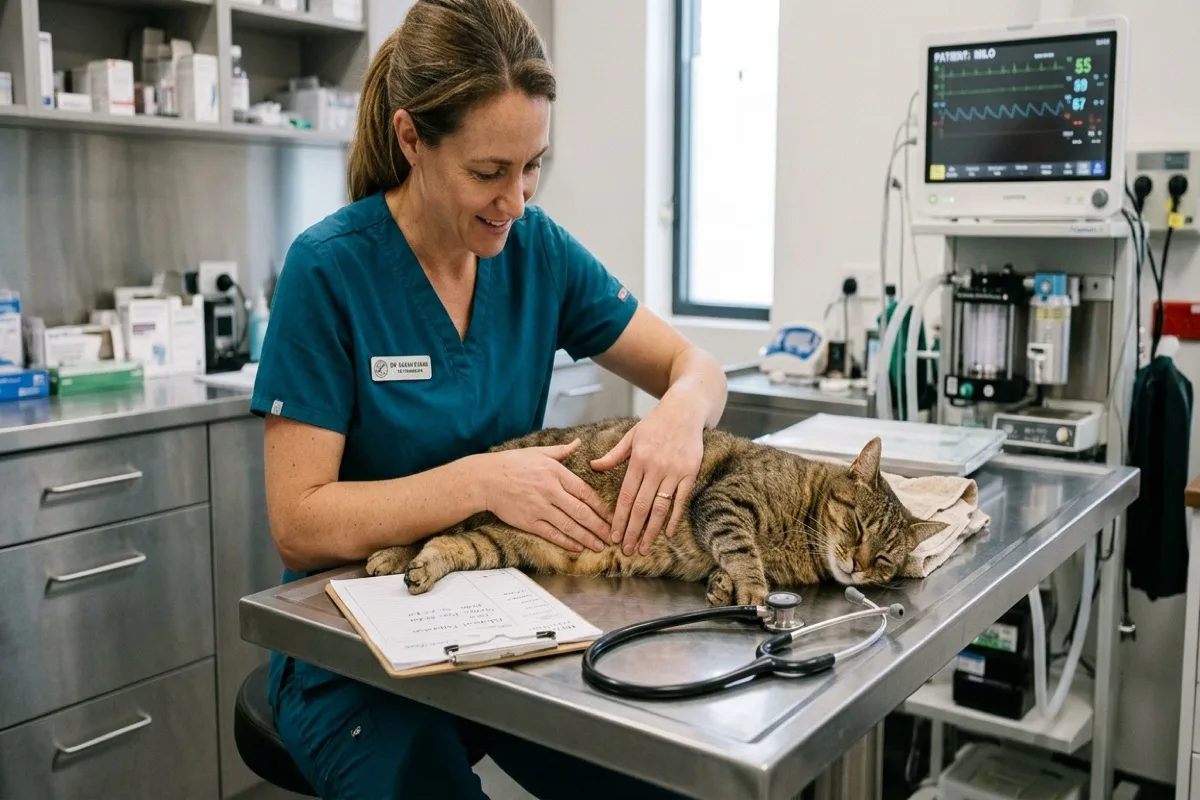
- Paradoxical Abdominal Respiration: The chest wall expands upon inspiration while the cranial abdomen pulls inward synchronously due to lost diaphragmatic tension.
- Muffled Cardiopulmonary Auscultation: Faint heart tones caused by interposed liver lobes or gas-filled intestinal loops in the ventral thorax.
- Thoracic Borborygmi: Pathognomonic presence of peristaltic bowel sounds audible over the pulmonary fields.
- Tucked-up "Empty" Abdomen: Palpation reveals an abnormally hollow, non-palpable cranial peritoneal vault.
- Trauma-Induced Shock: Pale/cyanotic mucous membranes, hypothermia, and impaired venous return through the caudal vena cava.
Triage, Stabilization, and Imaging
Minimal stress handling is non-negotiable; forced restraint for radiography can trigger fatal respiratory arrest:
- Flow-by oxygen therapy and warming: Cage rest with enriched oxygen.
- Thoracic FAST ultrasound (TFAST): Rapidly verifies abdominal organs cranial to the diaphragmatic line without positional stress.
- Thoracic radiography: Undertaken only after stabilization to visualize diaphragmatic line loss and soft-tissue or gas opacity in the thorax.
- Opioid analgesia (methadone or fentanyl): Relieves thoracic contusion pain and reduces rapid shallow hyperventilation.
Surgical Herniorrhaphy
Unless the stomach is herniated and tympanic (an acute strangulation emergency), surgery is delayed until shock and pulmonary contusions stabilize:
- Mandatory positive-pressure ventilation (PPV): Opening the coelomic cavity abolishes negative intrapleural pressure, necessitating immediate ventilator-assisted respiration.
- Visceral reduction: Careful retraction of herniated organs back into the abdomen, assessing liver and bowel viability.
- Diaphragm reconstruction: Continuous closure using monofilament synthetic absorbable or non-absorbable sutures (PDS or polypropylene).
- Evacuation of pneumothorax: Air is aspirated to restore negative pleural pressure prior to extubation.
Prognosis
Patients that survive the initial 24 hours post-operatively carry an outstanding long-term prognosis, with overall recovery rates exceeding 85% and complete restoration of normal exercise tolerance.
Scientific sources and references
- Schmiedt, C. W. et al. (2020). Traumatic diaphragmatic hernia in cats: 110 cases (2008-2019). Journal of the American Veterinary Medical Association, 257(9), 945-953.
- Minihan, A. C., & Baines, S. J. (2021). Traumatic diaphragmatic rupture in cats: a review of presentation, surgical management, and outcomes. Journal of Feline Medicine and Surgery, 23(4), 311-322.
- Gibson, T. W. et al. (2022). Perioperative risk factors and outcome in feline diaphragmatic hernia repair. Veterinary Surgery, 51(3), 441-450.
Caring for a cat? Keep their health in your pocket
Register your cat on Nekolife to track vaccination history, weight, and get advice from loving cat parents.
- Vaccine & weight records
- Supportive cat community
- Earn Meow Points & badges
Related pages
Know someone who needs this?